
The impact of led grow lights on plants growth
author: East Liu
2026-04-16
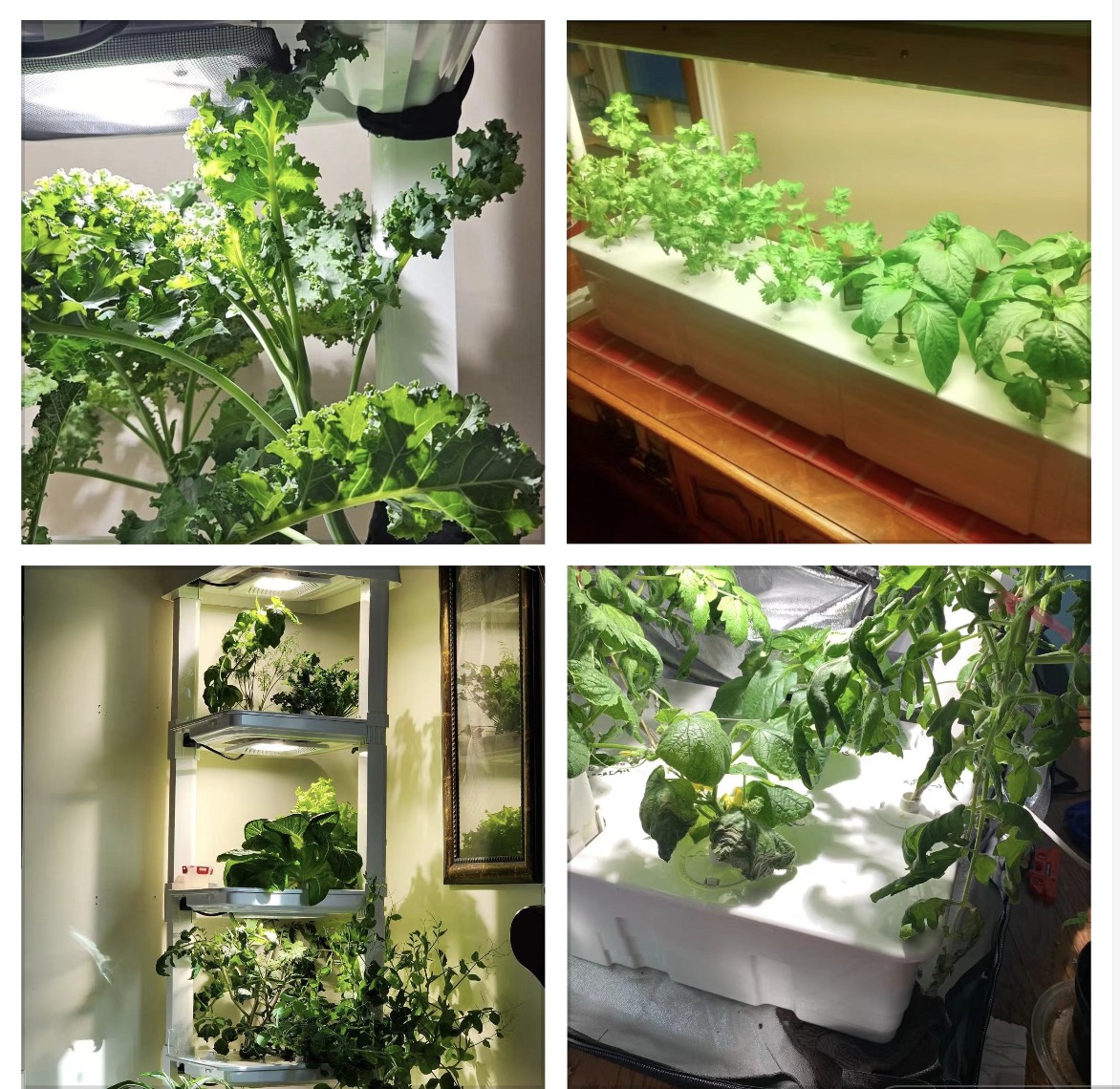
Specific led grow lights (i.e., light of different wavelengths) has a significant impact on plants growth, primarily achieved by regulating processes such as photosynthesis, morphogenesis, and physiological metabolism.
1. The crucial role of light quality (wavelength) in plants growth.
1).Red light (600–700 nm, with a peak at about 660 nm):
It is efficiently absorbed by chlorophyll, significantly enhancing the rate of photosynthesis.
Promote carbohydrate synthesis, stem elongation, and flowering induction (especially for long-day plants).
It is conducive to fruit ripening and seed development.
Promote carbohydrate synthesis, stem elongation, and flowering induction (especially for long-day plants).
It is conducive to fruit ripening and seed development.
2).Blue light (400–500 nm, with a peak at about 450 nm):
It is also efficiently utilized by chlorophyll, enhancing photosynthetic efficiency.
Regulate stomatal opening, phototropism, and leaf expansion.
Promote the synthesis of proteins and organic acids, inhibit excessive elongation of stems, and make plants more compact.
Regulate stomatal opening, phototropism, and leaf expansion.
Promote the synthesis of proteins and organic acids, inhibit excessive elongation of stems, and make plants more compact.
3).Green light (500–600 nm):
Most of it is reflected or transmitted, with low absorption rate and small contribution to photosynthesis.
It can penetrate the leaf layer under strong light, assisting photosynthesis in the lower leaves, but the effect is poor when used alone.
It can penetrate the leaf layer under strong light, assisting photosynthesis in the lower leaves, but the effect is poor when used alone.
4).Far-red light and ultraviolet light:
Far-red light (>700 nm) participates in phytochrome regulation, affecting flowering and shading responses.
UV-B (280–320 nm) can induce flavonoid synthesis and enhance stress resistance at low doses, but inhibits growth at high doses.
UV-B (280–320 nm) can induce flavonoid synthesis and enhance stress resistance at low doses, but inhibits growth at high doses.
2.Photoperiod (duration of light exposure) regulates reproductive plants growth.
Plants growth are divided into three categories based on their response to daylength in flowering:
1).Long-day plants (such as wheat and spinach): They require sunlight longer than the critical duration (such as 13 hours) to bloom.
2).Short-day plants (such as chrysanthemums and soybeans): They require less than a critical duration of sunlight (such as 14 hours) to bloom.
3).Day-neutral plants (such as tomatoes and cucumbers): flowering is not significantly affected by photoperiod.
Artificial regulation of photoperiod can advance or delay flowering, which is used in protected agriculture and breeding.
3.Practical application: Design principles of plant led grow light.
Modern plants grow lights (such as LEDs) are optimized specifically for the needs of plants:
Red and blue light combination (common ratio 4:1 or 5:1):
Blue light promotes the development of leaves and roots;
Red light stimulates flowering and fruiting.
Blue light promotes the development of leaves and roots;
Red light stimulates flowering and fruiting.
Full-spectrum LED grow lights: Simulates sunlight, covering 400–720 nm, excluding the green peak (due to plants reflecting green light).
Ordinary lighting lamps (such as LED table lamps) have a high proportion of green and yellow light, with a photosynthesis utilization rate of only 20%–30% for plants, which is far lower than that of plant lights (>70%).
4.Differences in light requirements among different plants growth.
Positive plants (such as roses and sunflowers): require strong light and full spectrum, especially rely on red and blue light.
Negative plants (such as pothos and ferns): tolerant of weak light, prefer scattered blue-violet light, and avoid direct strong light.
Neutral plants (such as Clivia): They have a wide range of adaptability, but sufficient light still promotes flowering.
Negative plants (such as pothos and ferns): tolerant of weak light, prefer scattered blue-violet light, and avoid direct strong light.
Neutral plants (such as Clivia): They have a wide range of adaptability, but sufficient light still promotes flowering.
In summary, specific light precisely regulates plant growth through the triple dimensions of wavelength, intensity, and duration. In home gardening or agriculture, selecting plants lights with a reasonable ratio of red and blue light can significantly enhance growth efficiency, flowering and fruiting rates, as well as disease resistance.